Brick or Stone: Reading a Building’s Local Materials
Brick or stone clues can help you read a building’s local materials, distinguish surface from structure, and notice how builders adapted to place.
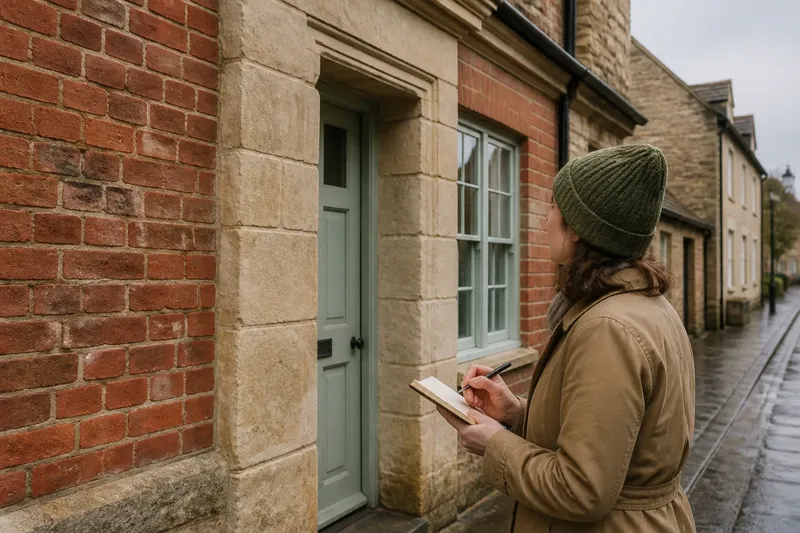
On a damp walk, a red wall may look rough and a pale one almost smooth, but a closer look changes the story: the red face has crisp, repeated joints, while the pale blocks vary in size and edge. Brick or stone clues can help you read a building’s local materials without turning one façade into a claim about a whole region. Start by asking what you can actually see: the shape of the units, the joints between them, and the way the wall meets its openings.
What can a wall tell you at a glance?
Brick is usually recognizable by its regular, block-like units and narrow mortar joints. The pieces may vary in color or surface, but repeated courses—horizontal rows—often make the pattern easy to follow. Look at corners, window surrounds, and the area beneath the roofline, where brickwork may be laid in a different pattern or paired with another material.
Stone is less uniform in appearance, though it can be cut into very regular blocks. A wall of roughly shaped stones may have broad mortar joints and irregular courses; carefully dressed stone, by contrast, can appear almost as ordered as brick. Grain, veins, small pits, and changes in color can help distinguish one stone face from another, but a surface coating may hide those details.
These observations describe the visible finish, not necessarily the whole wall. A brick exterior can cover a different supporting structure, and a stone face can be a thin facing rather than a wall made entirely of stone. Treat the surface as evidence about what is visible, not a complete account of construction.
Which material clues fit your situation?
- If the pattern is regular: Look for repeated brick courses, consistent block sizes, or a deliberate bond—the arrangement of overlapping units. This situation fits a closer reading of layout, because the pattern may reveal how the visible masonry was organized; it does not, by itself, identify the source of the material.
- If the surface varies sharply: Compare the color, grain, and edges across several parts of the wall. This fits stone particularly well, since natural variation can remain visible from piece to piece. Check whether the same texture appears on a sheltered side before concluding that the differences reflect the material rather than weathering.
- If the wall has a smooth or painted face: Focus on joints, corners, and any exposed edge. This situation calls for restraint: render, paint, or later cladding can conceal the underlying material, so a visual guess may be less reliable than the masonry pattern.
- If brick and stone appear together: Notice where each begins and ends. Stone may frame an entrance or reinforce a corner while brick fills the broader wall, or the two may belong to separate building phases. The boundary is a useful clue to a design choice, not proof of when or why it was made.
Say you pass a hypothetical old shop with a pale stone doorway set into a red brick front. The doorway’s cut edges are sharper than the uneven brick courses around it, so you note a contrast in material and workmanship; you leave the reason open unless other evidence supports it.
How can you tell material from construction pattern?
Material is what the visible units are made from; construction pattern is how those units are arranged and joined. A running bond, for example, offsets the vertical joints in successive brick courses. Stonework may also be laid in courses, or it may use irregular pieces fitted together with more visible mortar.
Mortar deserves its own look. Its color, width, and finish can make units seem more or less prominent, and repairs may use mortar that differs from the original. A recessed joint casts a stronger shadow than a flush one, changing the apparent texture of the wall. Do not infer age or local tradition from joint style alone: repair, repointing, and later alterations can change what you see.
Also check how openings are formed. A brick arch, a flat lintel, and a stone surround each create a different relationship between wall and window or door. These details show how builders handled edges and loads, but assessing whether a feature is structurally sound is a job for a qualified professional, not a visual walk-by.
What questions help you read brick and stone?
Does brick color identify where it came from?
Not by itself. Clay, firing, surface treatment, age, and exposure can all affect a brick’s appearance, while similar colors occur in many places. Record the visible color as a clue, then look for corroborating details rather than assigning a local origin.
Can rough stone reveal a local building tradition?
Rough stone can reflect available material, desired appearance, or a practical choice about shaping and fitting pieces. Similar methods can appear beyond one area, so compare the wall’s coursing and finishing with nearby buildings before describing a pattern as regional.
How can I tell whether a wall is solid masonry or a facing?
A street view usually cannot settle that question. Exposed edges at a doorway or a visible return may offer clues, but coverings and later work can obscure the build-up; avoid treating a thin-looking detail as proof of what lies behind the face.
What should I do when paint or render hides the material?
Describe the surface you can see and look for unobtrusive clues at corners, openings, or damaged areas without disturbing the finish. If the underlying material matters for a building project, rely on suitable professional assessment rather than scraping or removing a coating yourself.
How do visible materials connect a building to its neighbors?
Compare several buildings along the same street, not just one striking façade. Do brick colors repeat? Are stone blocks used mainly around entrances, or across whole fronts? A cluster of shared choices can suggest a common building practice, while differences may reflect changing tastes, available supplies, or individual decisions.
Keep the description specific: “red brick in offset courses with pale stone at the doorway” says more than “typical local style.” The former is directly observable; the latter makes a broader claim that needs more evidence. This distinction matters in places where materials and building habits cross regional boundaries.
When you make a note or take a photograph, include the wall’s setting as well as its texture: the neighboring buildings, the street-facing side, and any visible repairs. Brick or stone details become more useful when compared carefully, and the most reliable reading leaves room for what the surface cannot tell you.