The One-Origin Story Behind a Regional Dish
A regional dish’s one-origin story can hide generations of exchange. Learn how to compare origin claims and choose a fair account of its changing recipe.
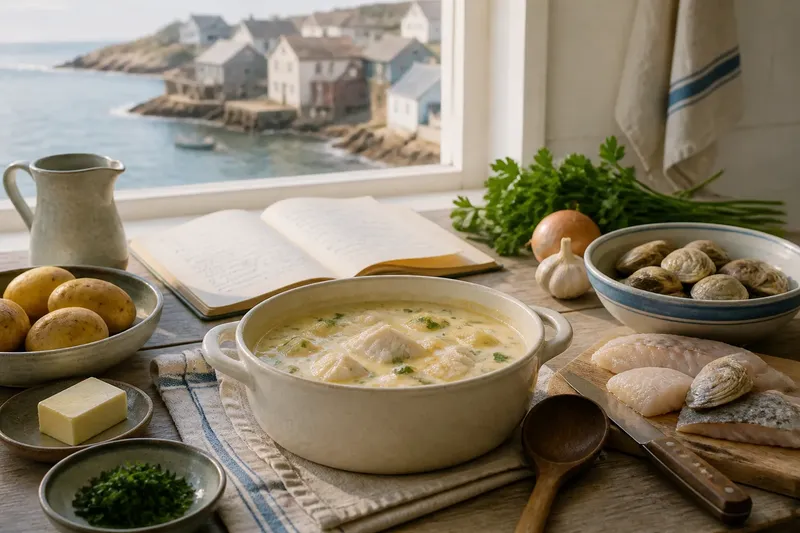
A bowl of chowder arrives with a story: a fishing village, a resourceful cook, a recipe born in one kitchen. That account may make a memorable introduction, but a regional dish’s one-origin story often turns a long process of borrowing, adaptation, and household choice into a single scene. To understand what a dish says about a place, it helps to compare different kinds of origin claims rather than ask only who invented it.
Why does one dish attract one origin story?
Food stories often begin with a convenient moment: a named cook, a local harvest, a ship reaching shore, or a clever use for leftovers. A crisp beginning is easy to remember and repeat. The actual history may be less tidy, with ingredients and techniques entering a community at different times and through different routes.
There is also a difference between a dish’s name, its familiar form, and the first time someone cooked something similar. A name might become popular after a recipe is already circulating. A recognizable version might develop gradually, as cooks settle on a combination that feels characteristic. Neither point necessarily identifies an inventor.
Regional identity can sharpen the story further. A town, valley, or coast may use a dish to express what makes it distinct, even when neighboring places prepare related food. That does not make the local claim false; it means the claim may describe belonging and recognition better than exclusive invention.
What does each kind of origin claim tell you?
Three approaches can help a reader assess a dish’s beginnings. Each suits a different question, and none needs to erase the others.
Does a named-creator story suit this dish?
A named-creator story credits a person, household, inn, or restaurant with making a dish recognizable. It is most useful when the claim is narrow and checkable: perhaps someone introduced a particular name, combination, or presentation. It becomes less convincing when it leaps from “popularized here” to “invented here” without explaining the difference.
Look for what the story actually credits. Did the cook create the whole dish, adjust an existing preparation, or serve a version that later became famous? Those are different contributions. A careful account preserves the distinction instead of turning influence into sole authorship.
Does a place-and-ingredient story fit better?
This approach connects a dish to what people could obtain locally: a fishery, grain, dairy tradition, orchard, or preserved food. It suits dishes whose recognizable character depends on the local ingredient or on ways of keeping food through changing seasons. But availability explains why a recipe made sense, not necessarily when or where its first version appeared.
Ingredients also travel. A regional dish may depend on a crop grown elsewhere, a spice brought through trade, or a preserved ingredient adopted from a neighboring cuisine. A place-and-ingredient account is strongest when it explains both the local fit and the connections beyond the region.
Does a gradual-change story suit the evidence?
A gradual-change account treats a dish as a family of related preparations rather than a finished recipe with a single birth date. It suits foods that vary between households or across neighboring communities, especially when the name remains stable while ingredients and methods shift. The tradeoff is that it can feel less satisfying if a reader wants a single person or place to credit.
To choose among these approaches, ask what kind of evidence the claim would need. A creator claim calls for evidence about a person and a particular contribution; an ingredient claim calls for a clear link between local supply and the dish; a gradual-change account should explain variations rather than dismiss them as errors.
How do ingredients and neighboring kitchens alter a recipe?
Recipes change when cooks work with what is at hand. A household may use a different cut, substitute a local herb, thin a sauce, or change a cooking vessel. A method can travel too: a neighboring community’s way of seasoning or preserving food may become part of a dish without replacing its local name.
These changes are not simply departures from an authentic original. “Authentic” can mean a version associated with a particular household, community, or occasion. When several versions have long-standing local use, declaring one the only true recipe may obscure how the food actually belongs to the place.
Imagine a coastal household whose familiar fish stew calls for one local fish. When that fish is scarce, the cook uses another available catch and keeps the same broth and serving custom. The expected result is a stew that tastes somewhat different but remains recognizable to the household; the change reveals adaptation, not proof that the older version had one inventor.
Neighboring traditions can contribute in quieter ways. A shared market may make a spice common, while family ties carry a technique across a regional boundary. Over time, the borrowed element can feel entirely local because people have made it part of their everyday cooking.
Which clues help compare a dish’s origin stories?
When accounts disagree, compare their claims rather than choosing the most vivid story. A recipe’s wording, an old menu, a family account, or a local food tradition may offer different kinds of clues, but each has limits. A menu can show that a dish was served, for example, without proving who created it.
- Separate the claims. Note whether the account concerns the name, the first known recipe, a popular version, or the dish’s broader ancestry.
- Check the scope. A claim about one restaurant or household is narrower than a claim that no similar dish existed elsewhere.
- Compare recipe details. Look for which ingredients and methods stay recognizable and which vary between versions.
- Notice the local conditions. Ask what ingredients, preservation methods, and cooking tools make the dish plausible in that setting.
- Look for exchange. Consider nearby food traditions and the routes by which ingredients or techniques could have reached the community.
- Keep uncertainty visible. If the accounts cannot establish a first, describe what they do support instead.
These clues are most useful together. A place’s ingredients may explain the dish’s character, while differences between household recipes show how that character has been maintained and adjusted.
What should you ask about a dish’s origin?
Can a dish have more than one origin?
Yes, if “origin” refers to different parts of its story. One place may be associated with a name, another with a technique, and a household or business with a well-known version. Specify which contribution you mean instead of making every claim compete for the same title.
Does a recipe variation make a dish inauthentic?
Not by itself. A variation may reflect a household’s ingredients, preference, or inherited method, while another version remains meaningful to a nearby community. It is more useful to describe who makes each version and what distinguishes it than to treat change as automatic evidence of error.
How can you describe an uncertain origin responsibly?
State what is known in plain language, then distinguish it from what is only attributed or remembered. “Associated with” or “popularized in” can be more accurate than “invented in” when the evidence supports a connection but not exclusive first authorship. Avoid supplying a precise beginning merely to make the account sound complete.
Why do regional dishes resemble food across a border?
Neighbors may share markets, ingredients, work, family ties, and cooking knowledge. Similarity does not by itself establish which community came first or that one copied the other. Compare the dishes’ names, methods, and local uses before drawing a conclusion.
How do you choose a fair account?
Choose the approach that answers the reader’s actual question. If a dish is closely linked to a named cook, explain the specific contribution and its limits. If local supply shaped its ingredients, describe that setting without claiming that it proves first invention. If versions vary across households and nearby places, a gradual-change account may fit best.
A useful account can hold these explanations together: a dish may be rooted in one place, shaped by a particular household, and enriched by neighboring food traditions. The phrase regional dish origin need not point to one decisive kitchen. It can describe how a recipe became recognizable through repeated choices, shared ingredients, and the ties people keep with the places around them.
When you tell the story, name the evidence and leave room for the recipe to keep changing. That gives readers something more enduring than a lone inventor: a way to see how a place cooks in conversation with its neighbors.